Friday, February 12, 2010

Photography- PEOPLE(:


The teachers are sitting together chit-chatting and having some drinks.

They have the duty of teaching their pupils well and are probably resting after a period of lessons.


Pupils are taking pictures of the sky...

They have nothing better to do that they had to do that.

(:

I didn’t know lady gaga and gangsters like taking pictures of the sky.


Pupils taking pictures of the surroundings.

Looks like they are so hardworking...


Why am I being lame?

Zzzz.


Miscellaneous: When is the best time for photography?

The best light to take photos is at twilight. This is not because of the sensational light, which it is, but that the strength of the sunlight and the strength of other minuscule human powered lights become the similar making the sun the best (sensational) fill light ever. And the light is not as direct.

http://automaticcamera.blogspot.com/2009/02/best-time-to-take-photos.html


JJ(:

Wednesday, February 10, 2010

Photography

Different Types

Advertising Photography

Aerial Photography

Architectural Photography

Astronomical Photography

Baby Photography

Black and White Photography

Cityscape Photography

Commercial Photography

Concert Photography

Digital Photography

Documentary Photography

Equine Photography

Family Photography

Fine art Photography

Food Photography

Glamour or Fashion Photography

Infrared Photography

Landscape Photography

Macro Photography

Nature Photography

Night Photography

Pet Photography

Portrait Photography

Seascape Photography

Travel Photography

Underwater Photography

Wedding Photography

Wildlife Photography

http://www.shotaddict.com/wordpress/2006/10/18/1382.html


Equipments

A camera, a tripod, lenses, filters, developing and printing equipment.


Aperture

A device that controls the amount of light admitted through an opening. In photography and digital photography, aperture is the unit of measurement that defines the size of the opening in the lens that can be adjusted to control the amount of light reaching the film or digital sensor. The size of the aperture is measured in F-stop.

http://www.webopedia.com/TERM/A/aperture.html


Focus

To make the image the sharpest and clearest.


Shutter Speed

In photography and digital photography the shutter speed is the unit of measurement which determines how long shutter remains open as the picture is taken. The slower the shutter speed, the longer the exposure time. The shutter speed and aperture together control the total amount of light reaching the sensor. Shutter speeds are expressed in seconds or fractions of a second. For example 2, 1, 1/2, 1/4, 1/8, 1/15, 1/30, 1/60, 1/125, 1/250, 1/500, 1/1000, 1/2000, 1/4000, 1/8000. Each speed increment halves the amount of light.

http://www.webopedia.com/TERM/S/shutter_speed.html


ISO Speed

ISO (International Organisation for Standardisation) is a standard for measuring light sensitivity which happens to function the same way with digital as it does with film. Therefore, your camera's ISO setting determines how sensitive the camera's sensor is to the light that reaches it. A higher ISO setting makes your sensor more sensitive to light, meaning that you can take photos in darker conditions without the need to use a flash or tripod. However, a high ISO also creates more noise, reducing the image quality.

http://www.amateursnapper.com/photography/what-is-iso-speed-setting


Metering

The metering system in a digital camera measures the amount of light in the scene and calculates the best-fit exposure value based on the metering mode explained below. Automatic exposure is a standard feature in all digital cameras. All you have to do is select the metering mode, point the camera and press the shutter release. Most of the time, this will result in a correct exposure. The metering method defines which information of the scene is used to calculate the exposure value and how it is determined. Metering modes depend on the camera and the brand, but are mostly variations of the following three types: Matrix or Evaluative Metering, Center-weighed Average Metering & Spot(Partial) Metering.

http://www.dpreview.com/learn/?/key=metering

White Balance

White balance (WB) is the process of removing unrealistic colour casts, so that objects which appear white in person are rendered white in your photo. Proper camera white balance has to take into account the "colour temperature" of a light source, which refers to the relative warmth or coolness of white light. Our eyes are very good at judging what is white under different light sources, however digital cameras often have great difficulty with auto white balance (AWB).

http://www.cambridgeincolour.com/tutorials/white-balance.htm

Composition(Rules)

Composition is the combining of distinct parts or elements to form a whole. In photography that thought is very important in taking good pictures. The following guidelines are just to be thought about though, it is not necessary to try to use them with every picture you take or there wouldn’t be any creativity in your work. Once you learn these rules and strategies you will be more prepared to find great picture spots and opportunities.

http://www.picturecorrect.com/tips/photography-the-rules-of-composition/

Techniques

Photographic Composition, Center of Interest, Subject placement, Simplicity, Viewpoint, Camera Angle, Balance, Shapes and Lines, Contrast, Framing, Foreground, Background, Perspective, Basic Lighting Techniques and Composition & Basic Shots.

http://photoinf.com/General/NAVY/Photographic_composition_Balance.htm

JJ(:

Thursday, January 21, 2010

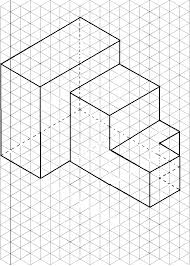
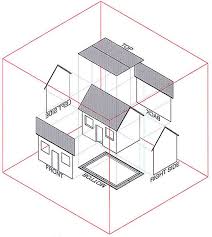
Difference between Isometric, Oblique and Orthographic Drawing.

Isometric drawing

Orthographic drawing

Oblique Drawing

Difference between Isometric, Oblique and Orthographic Drawing.

Isometric drawings- A pictorial representation of an object in which all three dimensions are drawn at full scale rather than foreshortening them to the true projection. An isometric drawing looks like an isometric projection but its all lines parallel to the three major axes are measurable. (http://www.businessdictionary.com/definition/isometric-drawing.html)

Oblique drawings- They are designed to show a three dimensional view of an object. It is a kind of a drawing that shows one face of the object in true shape, but the other faces on a distorted angle. Oblique is not really a '3D' system but a 2 dimensional view of an object with 'forced depth'. (http://wiki.answers.com/Q/What_is_an_oblique_drawing)

Orthographic drawings is a means of representing a three-dimensional object in two dimensions. It is a form of parallel projection, where the view direction is orthogonal to the projection plane, resulting in every plane of the scene appearing in affine transformation on the viewing surface. It is further divided into multi-view orthographic projections and axonometric pictorials. (http://www.answers.com/topic/orthographic-projection-1)


So basically, Isometric drawings is different from Oblique and Orthographic drawings. Oblique and Orthographic drawings are somehow similar to each other except that Oblique drawings shows only one face of the object in true shape whereas Orthographic drawings shows all the faces.


JJ(:

Friday, January 15, 2010

Define the theme-Environment


The surroundings or conditions in which a person, animal, or plant lives or operates.

It is the circumstances, objects, or conditions by which one is surrounded.
The complex of physical, chemical, and biotic factors (as climate, soil, and living things) that act upon an organism or an ecological community and ultimately determine its form and survival: the aggregate of social and cultural conditions that influence the life of an individual or community.
Taken from: http://www.merriam-webster.com/dictionary/environment

The sum of the total of the elements, factors and conditions in the surroundings which may have an impact on the development, action or survival of an organism or group of organisms.
Taken from: http://www.medterms.com/script/main/art.asp?articlekey=19104

The external conditions, resources, stimuli etc. with which an organism interacts. The totality of the surrounding conditions and elements in an individual.
Taken from: http://www.biology-online.org/dictionary/Environment

Summary: The Environment is a setting. It will always be changing. It involves the nature, the surroundings, the conditions or influence that affects everyone/everything around. It is also about the factors(development & survival) which might impact on the organisms. The impact may be positive or negative. Besides that, the Environment is also about the social and culture nature in the surroundings.

JJ(:

Tuesday, January 12, 2010

ADMT Lesson 1: Personal Reflection


This picture shows a caveman. It has no colours as colouring is counted as a form of art. The pattern on his shirt are not designs. Those are holes in his shirt. There is no sign of media in the picture. In the past, during the caveman times, there is no technology at all.
End of write-up.

What does ADMT means to you?
Art: The quality, production, expression, or realm, according to aesthetic principles, of what is beautiful, appealing, or of more than ordinary significance.
Design: To prepare the preliminary sketch or the plans for (a work to be executed), esp. to plan the form and structure of something.
Media: The means of communication, as radio and television, newspapers, and magazines, that reach or influence people widely.
Technology: The branch of knowledge that deals with the creation and use of technical means and their interrelation with life, society, and the environment, drawing upon such subjects as industrial arts, engineering, applied science, and pure science.
Source: Dictionary Reference

What are the attitude that an ADMT student should have?
An ADMT student should persevere in whatever they do. They should have a good learning attitude and move towards success. They should also never give up with the support of their friends and teachers.

What are you aspiration as an ADMT student?
My aspiration is to do well in whatever activity is given and I will give it my best.
I also hope to have a good conduct in class and have good progress in learning.

How do you think you can achieve your aspiration?
I can achieve it working diligently and striving for the best.

JJ(: